Research conducted mainly in the natural environment has shown biodiversity to be a key driver of multiple ecosystem functions (i.e. ecosystem multifunctionality) underpinning the provision of ecosystem services and undesirable disservices. Manipulation of biodiversity therefore has considerable potential to significantly improve green infrastructure (GI) i.e. networks of planned semi-natural spaces in urban environments designed and managed to provide ecosystem services. A major gap in knowledge hampering our ability to harness the benefits of biodiversity in urban areas is understanding how attributes particular to green infrastructure affect biodiversity-ecosystem multifunctionality (BEM) relationships
This project will improve our understanding of BEM relationships in response to the complexity of physical urban environmental features across different habitat types in diverse urban settings. Our objectives require testing BEM relationships at different spatial scales from small-scale, within-patch to UK-wide variation. We will test how the foundational role of soils can be manipulated in engineered landscapes to maximise ecosystem multifunctionality, and further test how the form of surrounding peri-urban and rural landscapes modifies the provision of ecosystem services and disservices across scales. We focus on services relevant to climate change and the health and wellbeing of people. Likewise, we focus on disservices that may negatively impact human health and the ability of urban environments to combat climate change.
Our specific objectives are to:
- Determine how attributes and connectivity of rural and peri-urban landscapes are associated with biodiversity of urban GI and the ecosystem services and disservices they regulate. This objective requires UK-wide observations to capture the breadth of landscape attributes that may impact urban ecosystem multifunctionality.
- Determine how relationships between BEM are influenced by key physical attributes of urban environmental features including area and connectivity. This objective will require local scale (10s m2) observations of GI features within urban areas.
- Test how manipulation of urban soil and plant diversity restores and enhances ecosystem multifunctionality. This objective will require controlled experimental manipulations at fine spatial scales (mesocosm) and will provide mechanistic insight into BEM relationships.
- Synthesise empirical data from Objectives 1-3 through the development of statistical and agent-based models. Outputs from these models will be used to create spatial planning tools.
- Develop enabling mechanisms to embed knowledge generated by the project into urban land use and GI planning to maximise urban ecosystem multifunctionality and resilience. This Objective will also use the tools developed in Objective 4 to predict how urban planning scenarios will impact the form of GI and the ecosystem services and disservices they regulate.
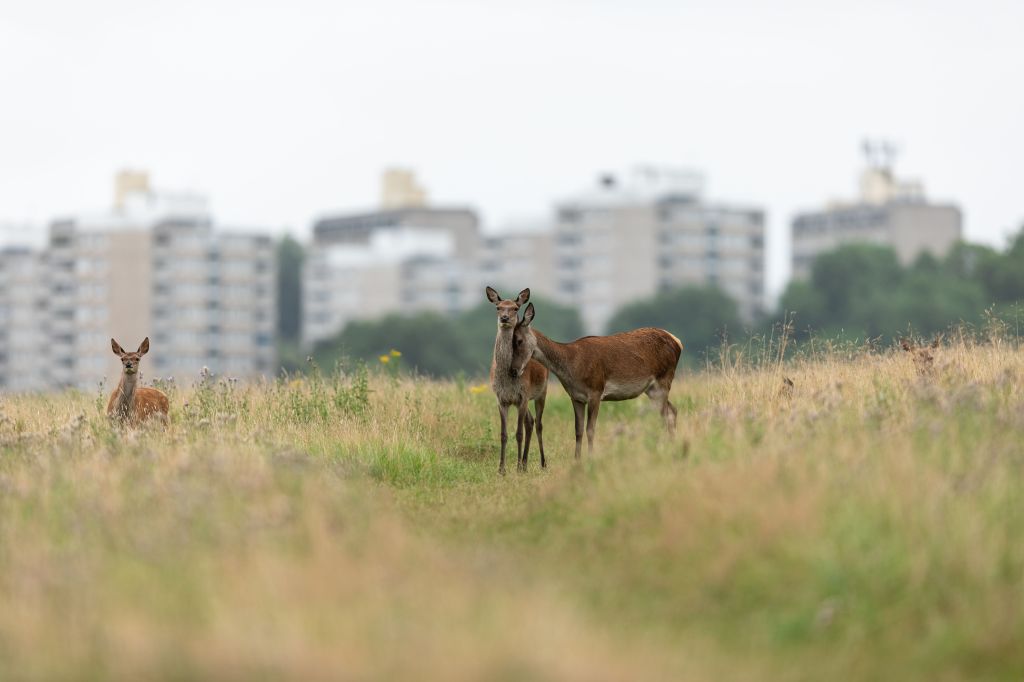
 Maximising ecosystem services in urban environments (MEaSURE)